A 30-yard container is the right call when a project generates more than 8 pickup-truck loads of debris and a single pull is cheaper than two smaller swaps. A full roof tear-off on a Richmond District Victorian, a…
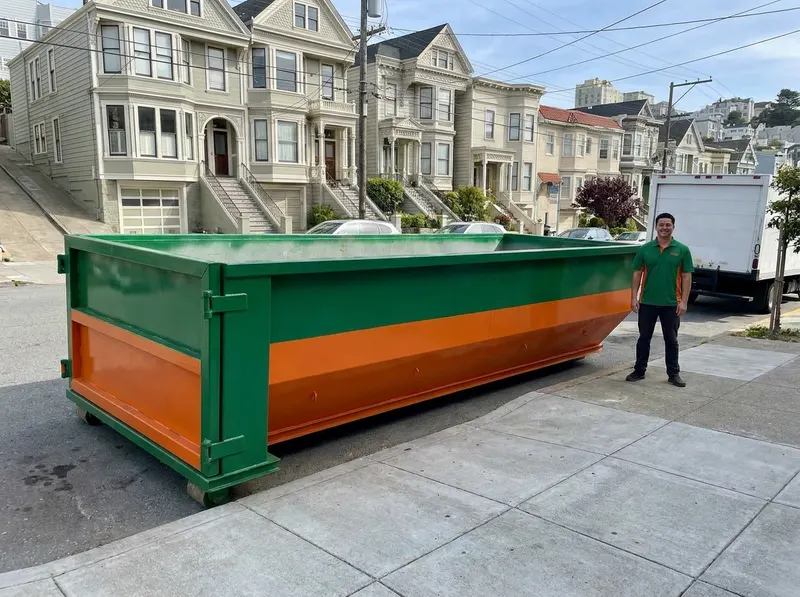
A 30-yard container is the right call when a project generates more than 8 pickup-truck loads of debris and a single pull is cheaper than two smaller swaps. A full roof tear-off on a Richmond District Victorian, a kitchen-and-bath gut in Noe Valley, or a whole-floor commercial build-out in SoMa will fill a 20-yard and still leave material on the ground, the 30-yard eliminates that second trip and the second rental fee. The trade-off is footprint: at 22 feet long the container needs a clear driveway run or a street-space permit. Most Dogpatch lots and Potrero Hill driveways can absorb that length; a narrow shared driveway in the Mission District or a tight alley in Visitacion Valley may not. Confirm driveway clearance and any overhead obstructions, a garage overhang, a low utility line, before scheduling the drop.
San Francisco's DPW street-space permit process is the single most common scheduling mistake on large jobs. If the 30-yard needs to sit on a public street, common near Oracle Park in SoMa or along the Embarcadero-adjacent blocks, the permit window is a minimum of 3 business days, and some blocks near high-traffic corridors take longer. Booking the container without confirming the permit date first can push a Monday project start to Thursday. Mention the address at the time of booking; the street-cleaning schedule for that block matters too, because a container left during a posted street-cleaning window earns a DPW citation that lands on the property owner, not the hauler.
The $895 flat rate covers delivery, a standard rental period, and pickup, no separate dump fee or tonnage surcharge is added at the end. All-in pricing is the norm here because the alternative, a low quoted rate plus a per-ton overage, routinely adds $150 to $300 to the final invoice on a heavy roofing or concrete job. One note on weight: concrete, tile, and brick are dense enough that a 30-yard loaded exclusively with masonry may hit weight limits before it looks full. If the project is primarily concrete demolition, a smaller container loaded in multiple pulls is often the more cost-efficient path; mixed debris, drywall, lumber, roofing felt, fixtures, fills a 30-yard without hitting those limits. The full size lineup runs from a 10-yard at $695 up through a 40-yard at $995, so if the project scope shifts the right size is available.
For property managers turning over a multi-unit building in the Outer Sunset or Bayview-Hunters Point, the 30-yard handles a full unit cleanout plus common-area debris in one container. GCs pulling permits for a Dogpatch live-work conversion or a Excelsior District addition typically schedule the 30-yard for the demo phase and swap to a smaller size for finish-work scraps. Either way, the drop time is confirmed before the crew arrives so the container is on-site when the first load hits the ground.
Every job gets a firm, written price after a free on-site visit.
Tell us about your 30-yard dumpster rental job in San Francisco and we'll send a clear, written quote, usually the same day.
 Skyline Dumpster Rental