The 10-yard is the most-requested container size for San Francisco's dense residential blocks because it fits on a standard 22-foot driveway without blocking a shared gate or spilling into the sidewalk clearance zone.…
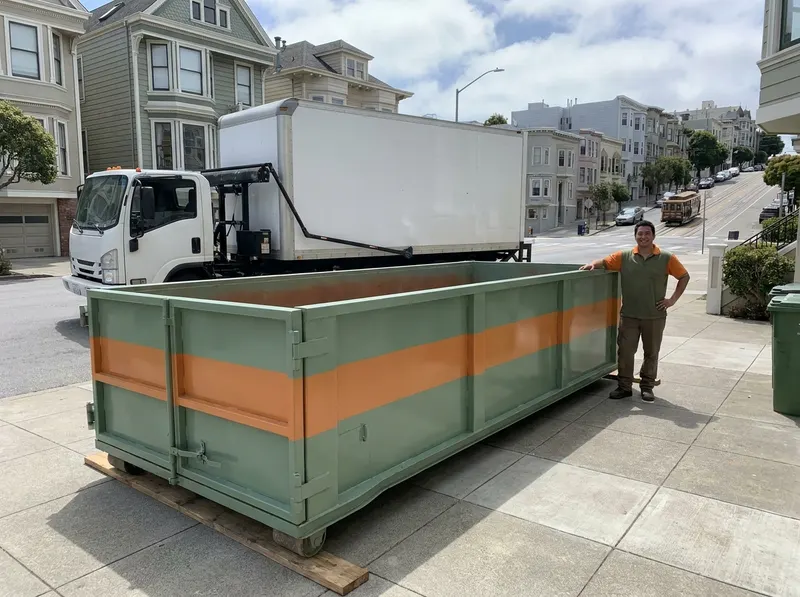
The 10-yard is the most-requested container size for San Francisco's dense residential blocks because it fits on a standard 22-foot driveway without blocking a shared gate or spilling into the sidewalk clearance zone. In Noe Valley and The Mission District, where Victorian flats sit on 25-foot lots and driveways are shared between two units, dropping a 20-yard container is often physically impossible, the 10-yard lands cleanly where a larger box cannot. Potrero Hill and Dogpatch homeowners doing a kitchen demo or a single-bathroom renovation consistently find the 10-yard handles the full debris load without paying for unused cubic yardage.
The flat $695 price is the complete number, delivery, haul-away, and disposal included. The next size up, the 15-yard, runs $750 and adds roughly 2 more pickup-truck loads of capacity. That $55 difference is worth it if the project scope is genuinely larger, but for a single-room gut in Excelsior District or a tenant-turnover cleanout in Visitacion Valley, the 10-yard handles the volume and keeps the cost at the floor. Oversizing to a 20-yard ($795) on a tight Richmond District driveway often creates a permit complication that costs more in time than the extra capacity is worth.
Street placement in San Francisco requires a DPW Temporary Street Space Permit when the container sits in a public parking lane or travel lane, a process that takes a minimum of 3 business days and carries its own city fee. Private driveway placements skip that step entirely. In SoMa and Bayview-Hunters Point, where older industrial blocks have wider curb cuts, street placement is more common and the permit timeline is the main scheduling variable. Outer Sunset and Richmond District addresses near Golden Gate Park frequently have street-cleaning restrictions on specific days, which affects which morning the container can legally sit at the curb. Flagging the exact address at booking, not just the neighborhood, lets the logistics team catch those conflicts before the truck rolls.
The 10-yard is a rental, not a junk-removal service: the customer loads the container, and the truck picks it up when the job is done. That distinction matters for budgeting, labor to load is the customer's, not the hauler's. For projects near Caltrain's 4th and King Station or Oracle Park where street access is time-sensitive on game days or commute peaks, scheduling the drop and pickup around those windows avoids a container sitting idle in a restricted zone. Rental periods are typically 7 days; extensions are available and should be confirmed at booking if the project timeline is uncertain.
Every job gets a firm, written price after a free on-site visit.
Tell us about your 10-yard dumpster rental job in San Francisco and we'll send a clear, written quote, usually the same day.
 Skyline Dumpster Rental